
IICRC Certified and Award Winning Water Damage Restoration Services.

In Metro Vancouver, the insurance claims process for water damage usually follows the same general workflow whether the damage comes from:
- burst pipes
- leaking appliances
- sewer backup
- heavy rain
- overflowing toilets
- condo/strata leaks
- flooding from neighbouring units
The exact process depends on:
- your policy coverage
- whether you own or rent
- whether the property is detached or strata/condo
- whether the source was sudden or gradual
Here’s how the process typically works in BC.
1. Stop the Water Source Immediately
Your insurer expects you to mitigate further damage.
Examples:
- shut off water supply
- call emergency plumber
- tarp roof leak
- remove standing water if safe
Failure to act quickly can reduce coverage.
Emergency mitigation is usually covered under most policies.
2. Document Everything
Before cleanup:
- take photos
- record videos
- document damaged belongings
- save receipts
- record dates/times
Important items:
- flooring
- drywall
- cabinets
- furniture
- electronics
- mold growth
- plumbing source
This documentation becomes critical during adjuster review.
3. Contact Your Insurance Company
Most insurers want notice:
immediately or within 24–48 hours
Your insurer will:
- open a claim
- assign a claim number
- assign an adjuster
- often dispatch a restoration companyYou’ll usually need:
- policy number
- date of loss
- cause of water damage
- photos/videos
- emergency mitigation invoices4. Emergency Mitigation Begins
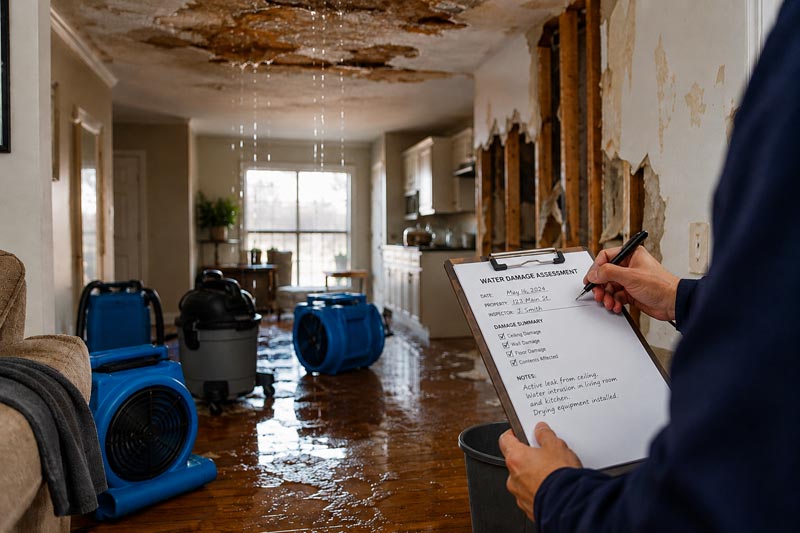
Most Metro Vancouver insurers authorize immediate:
- water extraction
- structural drying
- dehumidification
- demolition of wet materials
- mold prevention
This stage is urgent because mold can begin within 24–72 hours.
Restoration companies often:
- set up drying equipment
- remove damaged drywall
- monitor moisture daily
- provide reports to insurers
5. Insurance Adjuster Inspection
The adjuster determines:
- cause of loss
- coverage eligibility
- repair scope
- depreciation
- settlement amount
They may inspect:
- moisture readings
- plumbing failures
- maintenance history
- signs of long-term leakage
Important:
Most BC policies cover:
- sudden accidental water damage
But often exclude:
- long-term neglect
- gradual leaks
- poor maintenance
- some overland flooding without special endorsement
6. Coverage Review
Common BC water coverages include:
Coverage Type Usually Covered?
Burst pipe Yes
Appliance overflow Usually
Sewer backup Only if endorsement added
Overland flooding Only if added
Gradual leak Often denied
Roof leak from storm Usually
Groundwater seepage Often excluded
In Metro Vancouver, many homeowners mistakenly believe they have flood coverage when they only have sewer backup coverage.
7. Restoration Estimate & Approval
The restoration company submits:
- drying reports
- demolition scope
- rebuild estimate
- photos
- moisture logs
The insurer then:
- approves
- partially approves, or
- disputes portions
Large claims often involve:
- multiple inspections
- engineer reports
- asbestos testing
- mold assessments
8. Reconstruction Phase
After mitigation:
- drywall replacement
- flooring installation
- painting
- cabinetry
- trim
- insulation
- contents restoration
Typical timelines:
- minor water damage: 1–3 weeks
- moderate claims: 1–3 months
- major reconstruction: several months
9. Deductibles & Settlement
You pay:
- your deductible
The insurer pays:
- covered repair costs above deductible
Common BC deductibles:
- $1,000–$5,000 standard home
- $25,000–$250,000 strata water deductibles in condos
Strata claims in Metro Vancouver can become complicated very quickly because:
- strata insurer
- owner insurer
- neighbour insurers
- may all become involved.
- 10. If Liability Is Involved
If another party caused the damage:
- upstairs neighbour
- contractor
- strata
- city sewer backup
Your insurer may:
pay first and then pursue reimbursement later (“subrogation”)
This is common in:
- condo leaks
- contractor-caused flooding
- failed municipal infrastructure
