We are certified and professional restoration company and want to share our top signs that you can use to identify hidden water damage by examining walls and floors. Unlike obvious flooding or burst pipes, concealed moisture behind walls can go unnoticed for weeks or even months while slowly damaging drywall, insulation, framing, flooring, and indoor air quality. By the time visible signs appear, the problem may already require extensive repairs and restoration.
In Metro Vancouver’s damp climate, hidden moisture problems are especially common in basements, bathrooms, kitchens, crawl spaces, and older homes with aging plumbing or poor ventilation. Recognizing the early warning signs of hidden water damage can help homeowners prevent mould growth, structural deterioration, and expensive restoration work.
1. Musty or Damp Odours
One of the earliest signs of hidden water damage is a persistent musty smell. Moisture trapped behind walls creates the perfect environment for mould, mildew, and bacteria growth, which often produces a damp or earthy odour.
If certain rooms consistently smell musty despite cleaning or ventilation, there may be hidden moisture inside the walls, ceilings, or flooring. Basements, bathrooms, laundry rooms, and areas near plumbing fixtures are especially vulnerable to concealed leaks and humidity buildup.
A lingering odour is often a warning sign that moisture has been present for an extended period of time and should be professionally investigated before the damage worsens.
2. Discolouration or Stains on Walls and Ceilings
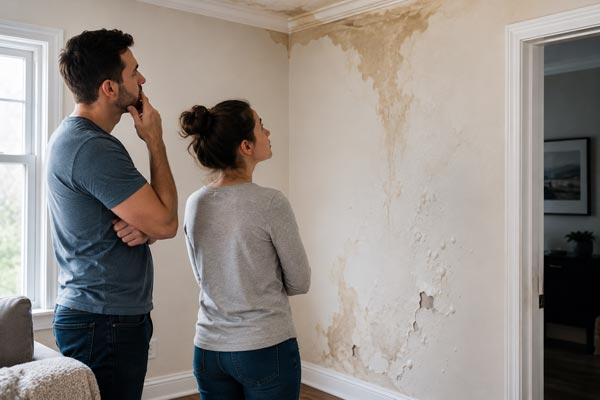
Water stains are one of the most recognizable indicators of hidden moisture problems. Yellow, brown, or copper-coloured stains may appear on drywall, ceilings, or around baseboards when water slowly seeps through building materials.
These stains are commonly caused by:
- Leaking pipes
- Roof leaks
- Window leaks
- Condensation buildup
- Plumbing fixture failures
- Water intrusion from exterior walls
Even small stains can indicate a larger hidden issue behind the wall surface. Water often travels along framing and insulation before becoming visible, meaning the source of the leak may not be directly above or beside the stain itself.
3. Peeling Paint or Bubbling Drywall
When moisture becomes trapped behind painted walls, it weakens the bond between paint and drywall. This can cause paint to bubble, blister, crack, or peel away from the surface.
Drywall may also begin to:
- Swell or warp
- Feel soft to the touch
- Develop visible bulges
- Separate at seams or joints
These signs are often mistaken for normal wear and tear, but they frequently indicate ongoing hidden moisture exposure inside the wall cavity.
Ignoring bubbling paint or warped drywall can allow moisture damage to spread deeper into structural materials and insulation.
4. Unexpected Increase in Water Bills
A sudden increase in your monthly water bill may point to a hidden plumbing leak behind walls, under floors, or within ceilings. Small pipe leaks can waste significant amounts of water over time while remaining completely invisible to homeowners.
If your water usage habits have not changed but your utility costs continue rising, it may be worth investigating for concealed leaks. Hidden plumbing leaks often occur in:
- Bathrooms
- Kitchens
- Laundry rooms
- Utility rooms
- Basement plumbing lines
- Older copper or poly-b piping systems
Professional moisture inspections and leak detection equipment can help identify hidden water sources before major structural damage occurs.
5. Warped Baseboards or Flooring
Water trapped behind walls often spreads downward into flooring systems and baseboards. As materials absorb moisture, they begin expanding, warping, or deteriorating.
Common signs include:
- Swollen baseboards
- Separated flooring seams
- Buckling hardwood floors
- Soft or spongy flooring
- Loose tiles or laminate
- Uneven floor surfaces
Even if the wall itself appears normal, flooring changes can indicate moisture migrating behind surfaces and affecting multiple building materials.
6. Mould Growth Appearing Indoors
Visible mould growth is a major warning sign of excessive indoor moisture. Mould commonly develops when hidden leaks remain unresolved for extended periods.
You may notice mould:
- Around baseboards
- Near windows
- Inside closets
- On ceilings
- Behind furniture
- Around bathroom fixtures
However, mould growth behind walls may remain hidden while spores continue spreading through the air. Some homeowners first notice increased allergy symptoms, respiratory irritation, or worsening indoor air quality before visible mould appears.
Because mould can spread rapidly in damp conditions, addressing hidden water damage early is essential for protecting both the property and occupant health.
7. Walls That Feel Damp or Cold
Walls affected by hidden water intrusion may feel damp, unusually cool, or humid compared to surrounding surfaces. Moisture trapped inside insulation and drywall changes the temperature of building materials and can sometimes be detected through touch.
In some cases, homeowners may notice:
- Condensation forming on walls
- Excess humidity in certain rooms
- Persistent dampness near plumbing areas
- Cold spots during colder weather
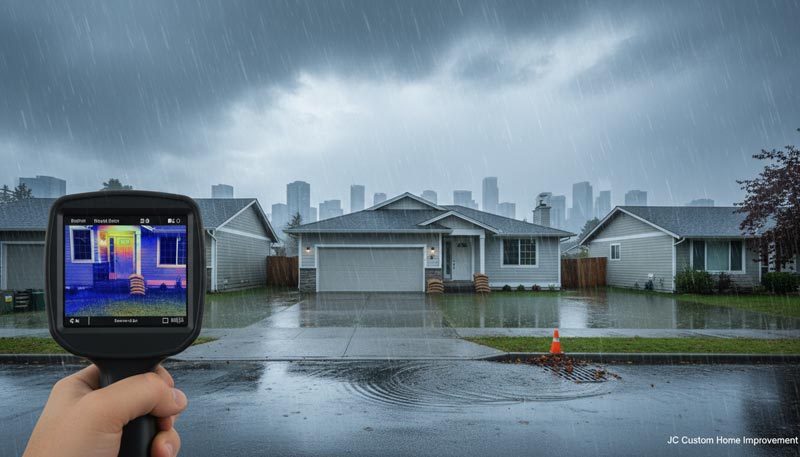
Professional restoration technicians often use thermal imaging cameras and moisture meters to locate hidden moisture inside walls without unnecessary demolition.
8. Cracking or Deteriorating Drywall
Long-term moisture exposure weakens drywall and structural materials over time. As water damage progresses, walls may begin cracking, sagging, or deteriorating.
Signs of advanced hidden water damage may include:
- Crumbling drywall
- Sagging ceilings
- Loose tape joints
- Nail pops
- Wall separation
- Structural movement around doors and windows
These issues may indicate significant internal moisture damage requiring immediate restoration and repairs.
9. Sounds of Running Water or Dripping
Sometimes hidden leaks can actually be heard before they become visible.
If you hear:
- Dripping sounds inside walls
- Water running when fixtures are off
- Hissing pipes
- Intermittent trickling noises
there may be a concealed plumbing leak behind the walls or ceilings.
These sounds should never be ignored, especially in older homes where plumbing systems may already be vulnerable to corrosion or deterioration.
Why Hidden Water Damage Should Be Addressed Quickly
Water damage rarely stays contained to one small area. Moisture can spread through insulation, framing, flooring, and drywall while creating ideal conditions for mould growth and structural deterioration.
Delaying repairs may lead to:
- Extensive mould contamination
- Rotting wood framing
- Damaged insulation
- Electrical hazards
- Reduced indoor air quality
- Costly structural repairs
Early detection and professional drying are critical for minimizing restoration costs and preventing long-term property damage.
Professional Water Damage Inspection and Restoration
At JC Custom Homes, we provide professional water damage inspections, moisture detection, drying, and restoration services throughout Metro Vancouver. Our team uses advanced equipment to locate hidden moisture behind walls, ceilings, and flooring before the damage spreads further.
We help homeowners identify the source of leaks, dry affected materials, prevent mould growth, and restore damaged areas safely and efficiently. Whether the issue is caused by plumbing leaks, storm damage, roof leaks, or hidden moisture buildup, we provide complete restoration solutions tailored to your property.