Atmospheric rivers are narrow corridors of Pacific moisture that can deliver extreme rainfall in a day or two. In Metro Vancouver, they often arrive with high freezing levels, melting mid‑elevation snow and rapidly increasing runoff. Combined with high tides and saturated ground, the result can be overland street flooding, sewer backups, and moisture intrusion into basements and crawlspaces.
Who was most affected in Metro Vancouver
Several low-lying and creek-adjacent areas saw the greatest impacts, especially where drainage systems were overwhelmed.
- Vancouver (city proper): Fraser River foreshore in Marpole and low spots along the North Arm; edges of the False Creek basin; Still Creek corridor near the Vancouver–Burnaby boundary.
- Richmond and Delta: Broad delta lowlands behind dikes prone to ponding during intense rain and king tides.
- Burnaby and New Westminster: Burnaby Lake/Still Creek system and low-lying riverfront pockets.
- Surrey and Langley: Nicomekl–Serpentine lowlands; Fraser riverfront areas like Bridgeview and Fraser Heights.
- North Shore: Steep creek fans in Lynn Valley, Capilano, Mosquito, and MacKay corridors where water can rise rapidly.
Why floods strike even outside mapped floodplains
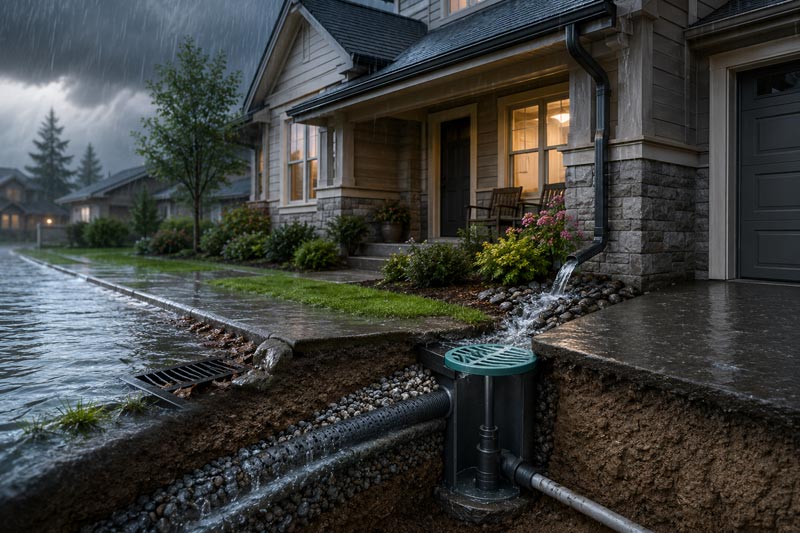
Urban hardscapes shed water quickly. When catch basins clog with leaves, water seeks the lowest routes—driveways, window wells, and foundation cracks. Older perimeter drains (clay “drain tile”) can fail, and tide-influenced outfalls slow drainage near the foreshore. That’s why homes outside formal floodplains can still experience interior water damage during an atmospheric river.
Your first 48 hours after flooding
Start with safety, then stabilize, document, and dry. Acting fast limits damage and speeds insurance approvals.
Safety first
- Treat standing water as potentially contaminated; avoid contact near electricity.
- If outlets or the panel were wet, do not turn power back on—get an electrician.
Document for insurance
- Take wide and close-up photos/video, including waterlines and contents.
- Create a room-by-room inventory and keep damaged items until instructed.
Stabilize and triage
- Clear exterior drains/window wells if safe; extend downspouts 2+ metres.
- Lift rugs/contents off wet floors; isolate unaffected rooms.
Begin drying (clean-water events only)
- Promote airflow and dehumidification; remove baseboards and drill weep holes low on drywall to release trapped moisture (Category 1 only).
- For sewer/creek water (Category 3), wait for professional mitigation with PPE and controlled demolition.
How JC Custom Home Improvement restores flood damage
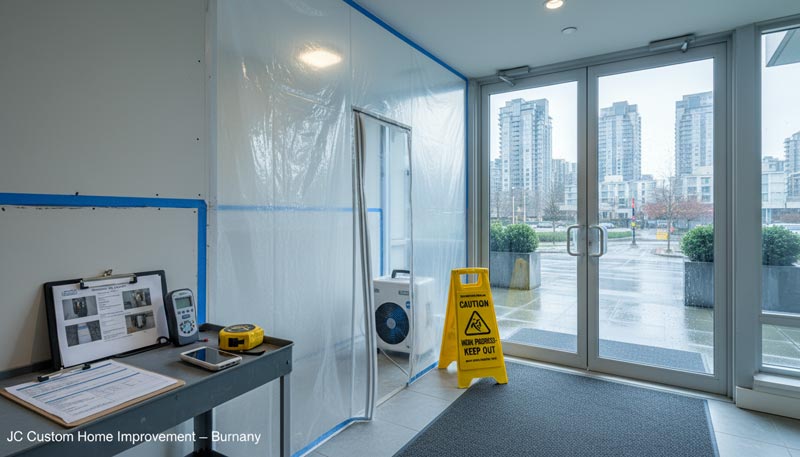
We combine thermal imaging with building-science-based drying to ensure hidden moisture is found and removed before rebuild.
Emergency assessment and thermal mapping
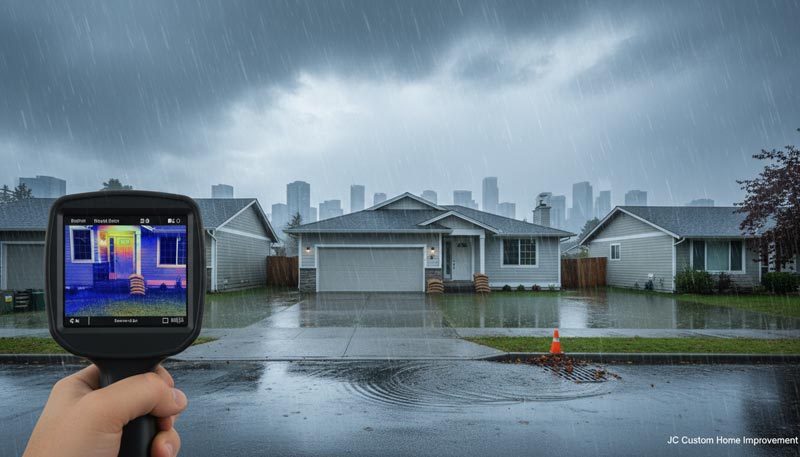
- Infrared scans and moisture meters identify moisture behind walls, under flooring, and inside cavities so nothing is missed.
Targeted extraction and demolition
- Remove saturated drywall, insulation, trim, and flooring where required; preserve what’s verifiably dry.
Structural drying and monitoring
- Commercial dehumidifiers and air movers with daily readings until dry standards are met.
Cleaning, antimicrobial treatment, and air quality control
- HEPA filtration, surface cleaning, and appropriate antimicrobial application.
Verification and rebuild
- Post-dry thermal scans, moisture logs, and insurer-ready documentation; then insulation, drywall, trim, paint, flooring, and finish carpentry.
Why thermal imaging matters after an atmospheric river
Moisture often wicks invisibly up studs, into rim joists, and beneath finishes. Thermal imaging reveals these cold, wet pathways so we can open only what’s necessary. That precision reduces unnecessary tear‑out, speeds drying, and produces clearer evidence for insurers.
Common issues we uncover during AR events:
- Window/door frame infiltration and failed sealant
- Hydrostatic pressure through foundation cracks and cold joints
- Sewer backup through floor drains or failed backwater valves
- Crawlspace pooling with wicking into subfloors and rim joists
- Hidden wet insulation in exterior walls and knee walls
Prevention and resilience for future storms
A few targeted upgrades and maintenance steps meaningfully reduce risk.
Drainage and grading
- Keep gutters clear; extend downspouts well away from the foundation; regrade soil to slope away from walls; consider French drains/swales.
Backflow and sump protection
- Install or service a backwater valve; test sump pumps; add battery backups and high-water alarms.
Building envelope and utilities
- Seal utility penetrations; maintain window/door caulking; use moisture-tolerant materials in basements (treated baseplates, moisture‑resistant drywall, tile/LVP).
Preparedness
- Keep sandbags, poly sheeting, fans, and PPE on hand before AR season.
- Schedule a baseline thermal/moisture scan to establish “dry” readings for post-storm comparison.
Neighbourhoods we frequently service during Atmospheric Events
Vancouver
- Marpole and the Fraser River foreshore along the North Arm
- Southeast False Creek/Olympic Village and low-grade pockets around False Creek
- Renfrew, Grandview–Boundary, and the Still Creek corridor near the Burnaby line
- Kitsilano low spots near older storm infrastructure and window wells
Richmond and Delta
- Broad delta lowlands behind dikes (e.g., Burkeville, Bridgeport, East Richmond pockets)
- Ladner and Tsawwassen areas prone to ponding during king tides and intense rain
Burnaby and New Westminster
- Burnaby Lake/Still Creek catchment (Brentwood, Willingdon/Still Creek Drive areas)
- Queensborough and riverfront pockets in New Westminster
Surrey and Langley
- Bridgeview and Fraser Heights riverfront pockets
- Nicomekl–Serpentine lowlands (South Surrey) and low-lying Langley neighbourhoods
North Shore
- Lynn Valley, Capilano, Mosquito, and MacKay creek fans where water can rise and carry debris quickly
- Low-lying waterfront margins with tide-influenced drainage